Spaces / 9 min read /
Exhibition Stand Design: From Layout to Qualified Leads
Published by XR Experience · Industry analysis
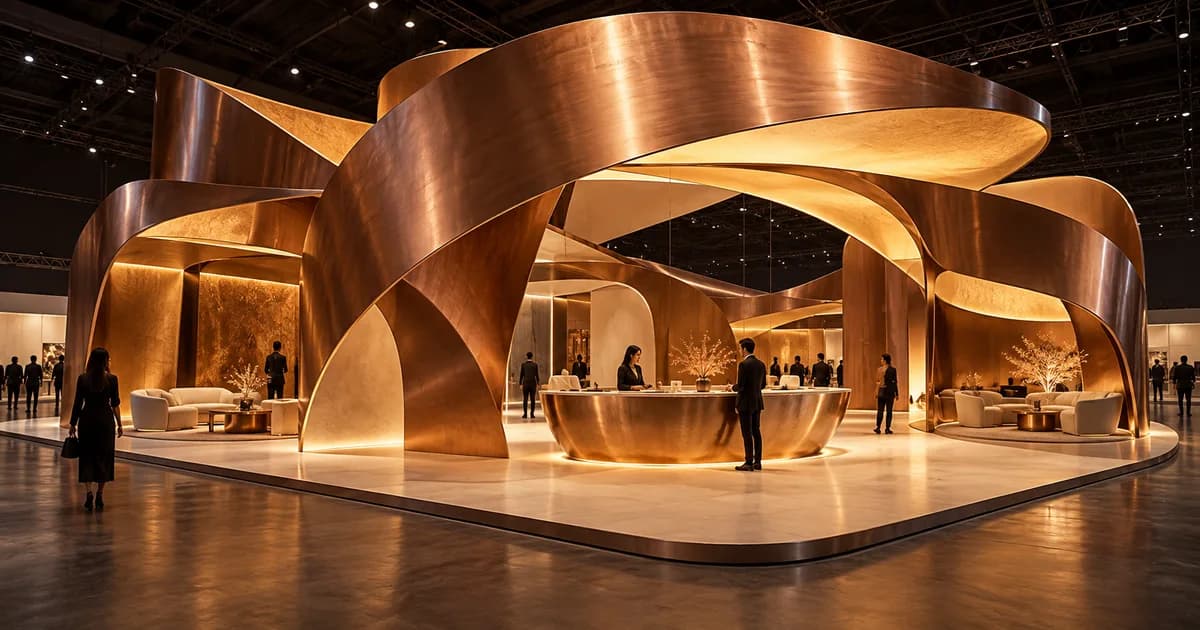
Exhibition stand design should help the right visitor understand, try and discuss what you sell. Appearance earns attention; the layout decides whether that attention becomes useful. Limited hands-on access was an obstacle for 44% of surveyed attendees (Freeman, 2025). A striking structure cannot compensate for a product nobody can reach. This guide turns the brief into practical decisions about entry, demonstrations, conversations, staffing and follow-up. It uses published research and editorial planning frameworks, not claimed client results. Start with the commercial purpose in your experience strategy, then give every part of the floor plan a job. The final test is simple: can a visitor move from curiosity to a relevant next step without guessing what to do?
What should an exhibition stand design brief contain?
Start with the visitor's decision, then specify the space needed to support it. Product discovery was a top-two commercial objective for 58% of respondents (Freeman, 2025). Your exhibition stand design brief should define the audience, the product question and the action worth recording, before it describes finishes or screens.
Write a concrete outcome such as: help relevant distributors compare the range and book a technical conversation. Then identify what they must see, touch or ask before that booking makes sense. This separates purposeful interaction from entertainment that happens to sit beside a logo. What uncertainty should the stand remove?
Add the venue pack, footprint, open sides, access restrictions, installation window, approved height and available utilities. Confirm which facts are fixed and which still need organizer approval. A visual concept based on an assumed rigging point or unverified power supply creates an avoidable redesign risk. Keep technical decisions with qualified specialists.
Describe the operating reality too: the product inventory, replenishment route, storage needs, host responsibilities and languages your audience needs. Note which visitors need seating, more time or an alternative way to experience the product. Accessibility should shape the route from the beginning, with applicable requirements checked for the venue.
Make the brief testable: request a dimensioned plan, sample finishes, demonstration sequence and measurement sheet. The study surveyed 1,022 attendees and 969 exhibitors, predominantly in the US (Freeman, 2025). Treat it as directional context, not an Egyptian conversion benchmark. For the wider concept, connect the brief to experiential marketing strategy.
- Name the priority visitor and the decision the stand should support.
- Confirm the footprint, open sides, utilities and organizer approval process.
- Specify demonstration, storage, replenishment and conversation requirements.
- Agree the next-step definition, data owner and follow-up process.
How should the exhibition booth layout guide visitors?
Give visitors an obvious invitation, a reachable demonstration and a place to continue the conversation. Some 24% reported no hands-on interaction at their most important event (Freeman, 2025). Exhibition booth layout should therefore protect access to the product, not let decorative structures or waiting groups consume the useful floor area.
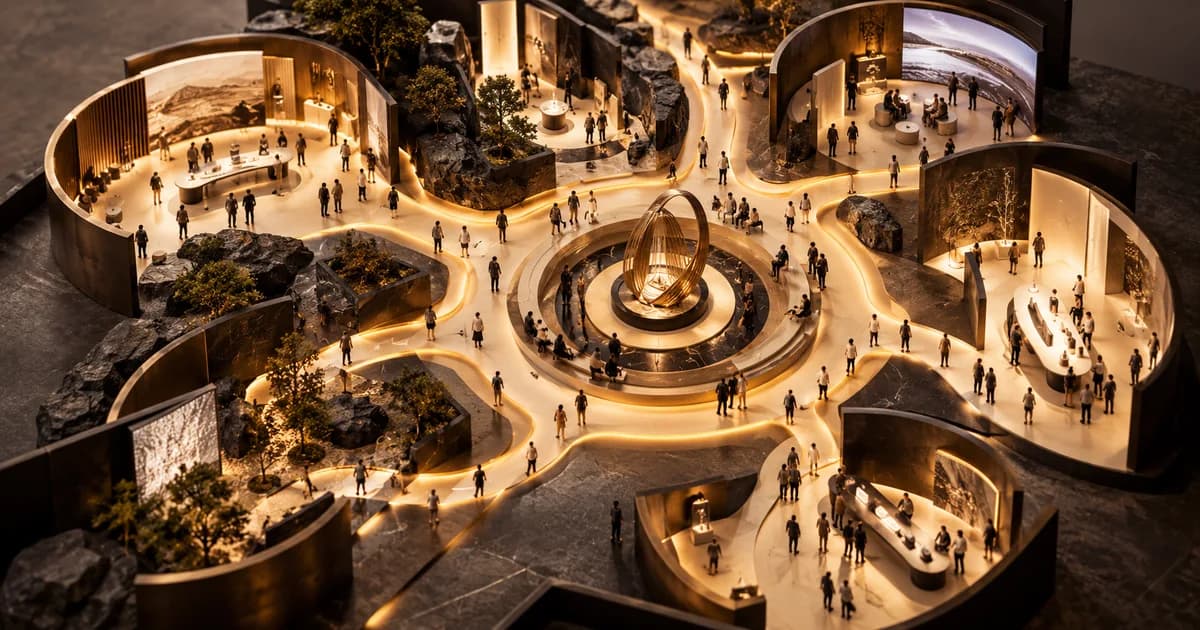
Map the journey from outside the stand. A passer-by should understand the offer before deciding to enter. Place the first invitation where it does not block people already participating. Consider what the person at the edge can see when the demonstration area is occupied, rather than judging only the empty render.
Separate quick discovery from longer discussion. Someone with a simple question should not have to join a full sales presentation. Conversely, a serious buyer needs somewhere to speak without holding up a demonstration. These routes can share a compact footprint when the furniture, host positions and transitions have been designed together.
Test the layout using realistic objects and movements. Mark the proposed counters, storage doors and queue on a floor plan, then walk through arrival, restocking and departure. Include bags, equipment cases and people pausing unexpectedly. Where would a wheelchair user wait or turn? Resolve those questions with the venue and access specialists before fabrication.
An editorial planning principle is to treat waiting space as part of the experience, not as leftover circulation. Give waiting visitors something relevant to understand, and a clear choice to return later. The same logic appears in experiential retail planning: attention becomes valuable when the environment helps people make progress.
Build a demonstration people can actually complete
Make the demonstration short enough to complete and rich enough to answer a real product question. In Freeman's survey, 96% agreed hands-on exposure made advocacy easier (Freeman, 2025). That is a reported perception, not a promised sales uplift. The practical design goal is understandable evidence, not simply a spectacular reveal.
Choose a single useful task for the visitor: compare a finish, try a feature, inspect a sample or test a relevant use case. Explain what success looks like before the interaction starts. A guest who leaves understanding one meaningful difference may be better served than someone who passively watches every feature in a loop.
Prepare the host's opening question and the demonstration's ending. Ask about the visitor's situation before choosing the example, then check what remains unclear afterwards. Avoid collecting contact details before the interaction has offered anything useful. What would persuade this person that a follow-up conversation deserves space in their calendar?
Rehearse the reset as carefully as the performance. Products need cleaning, software needs restoring, consumables need replacing and hosts need breaks. Measure the complete cycle under realistic conditions. If the interaction depends on a network connection, prepare an honest alternative that preserves the core learning without pretending the live system still works.
Treat the demonstration as a repeatable service, not a one-off presentation. Write the inputs, expected result, failure triggers and recovery steps into the operating brief. This editorial framework connects creative intent to delivery capacity. For adaptive interactions, the AI brand activation guide explains why boundaries and human alternatives matter.
How do you capture qualified exhibition leads?
Capture the need and agreed next step, not just a badge scan. Limited access to subject-matter experts was an obstacle for 40% of attendees (Freeman, 2025). Lead capture should preserve the value of that expert conversation, so the next person contacting the visitor knows what was discussed and why it mattered.
Define qualification before the show. Useful fields may include the visitor's organization, relevant need, timeframe, product interest and requested action. The right combination depends on your sales process. Do not turn every conversation into a rigid interrogation; let the host record context after understanding whether there is a genuine fit.
Separate attendance records, prize entries and commercial enquiries. Someone who accepts a giveaway has not necessarily asked for a sales call. Explain what information you collect and why, and have the actual consent, retention and supplier arrangements reviewed for applicable requirements. A short, clear collection process is easier for visitors and hosts to understand.
Assign a follow-up owner while the event is still running. A technical question should reach the appropriate specialist, with enough context to avoid restarting the conversation. Record the promised asset or meeting, its owner and the agreed timing. Then check whether delivery actually happened instead of reporting only that a spreadsheet was exported.
Keep the distinction between a lead and a sale visible in reporting. Use the event ROI framework to connect interactions with later outcomes and describe attribution limits. The editorial recommendation here is a continuity test: could a colleague who never attended the show send a genuinely relevant first response using the captured information?
Specify the build, breakdown and next use together
Price the full operating life of the stand, including removal and realistic reuse. Isla reported 42% of build materials were single-use in its measured dataset (isla, 2026). A modular label alone does not demonstrate sustainability; the brief needs an owner, storage plan and practical method for recovering each retained component.
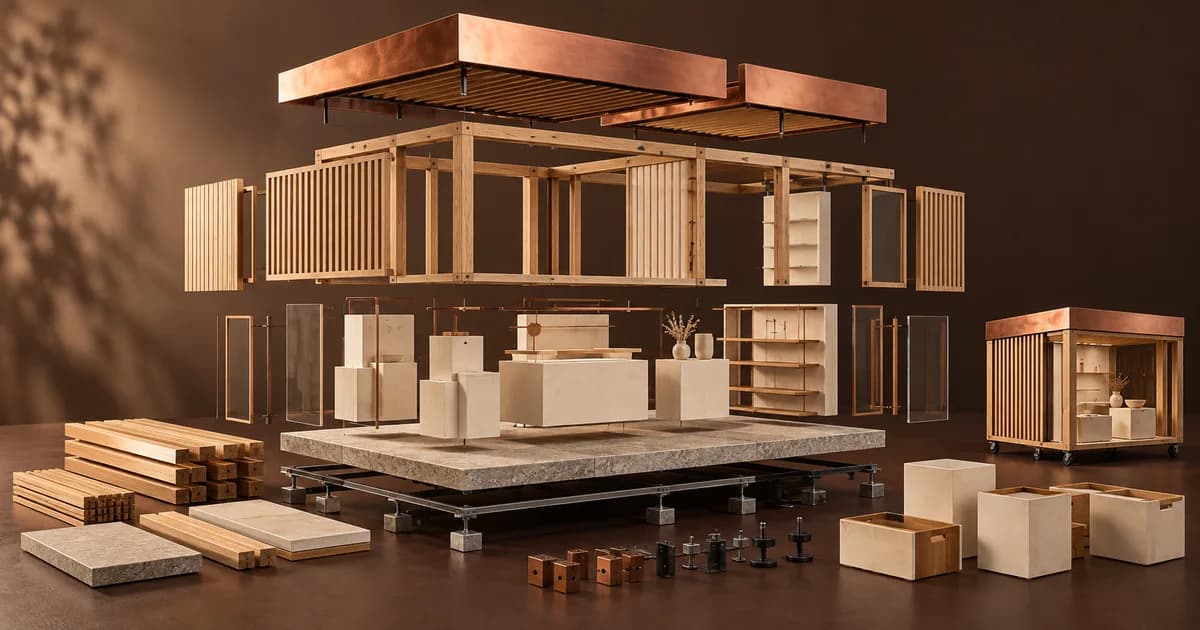
Ask the fabricator to distinguish reusable structure from campaign-specific surfaces. Graphics, finishes and feature pieces may change while counters, frames and transport protection remain useful. Accessible fixings and replaceable parts can make later refreshes easier. Request a demonstration of dismantling and reassembly, not only a photograph of the finished stand.
Include transport, packing, inspections and repairs in the comparison. A reusable component that is too costly to store or awkward to move may not suit the actual programme. Compare the intended sequence of events and venues, then select a system that can work across them without unsafe or improvised changes.
The same isla dataset found 84% of measured materials were virgin (isla, 2026). That finding supports asking what already exists before specifying new stock. It does not establish the environmental benefit of any particular stand. Keep material inventories and confirmed destinations so later claims describe evidence rather than intention.
Agree who signs off recovery at breakdown and who accepts the returned inventory. If the next use is uncertain, compare rental with ownership. The sustainable event design guide explains that decision in more detail; the important procurement shift is to assess the whole plan, not just the opening-day appearance.
How do you measure whether exhibition stand design worked?
Measure useful progress through the stand and the quality of subsequent follow-up. Freeman found 70% perceived faster purchase decisions after hands-on exposure (Freeman, 2025). That is not evidence that your stand will shorten its sales cycle by a fixed amount. Track your own results against a clearly defined objective and comparison.
Record completed demonstrations, relevant conversations, requested next steps and technical interruptions separately. A queue may indicate demand, but it may also reveal a slow reset or unclear instructions. Pair counts with short observations from hosts so the report explains where visitors made progress and where the experience created friction.
Use consistent definitions across the event. If one host counts a brief greeting as a demonstration and another counts only a completed trial, the totals will mislead. Document the counting method and its limits. For repeat shows, compare similar audiences and formats before crediting a design change for a difference in performance.
Review the commercial follow-through after the agreed reporting window. Which requests received responses, which meetings occurred and which opportunities advanced? Keep influenced pipeline separate from attributable revenue. Changes in sales can also reflect pricing, other campaigns or market conditions, so state the evidence behind any causal interpretation rather than implying certainty.
A useful exhibition stand design leaves the team with more than photographs. It produces a working layout, a demonstration people can complete and a traceable next step. Before the next event, choose one friction point to remove and one decision to measure better. Use those findings to refine the production and delivery brief, preserving what worked instead of starting again from a visual reference alone.
Frequently asked questions
What makes a good exhibition stand design?
+
A good stand makes its offer clear, supports a useful trial and provides a relevant next step. Freeman found 44% cited limited hands-on access as an obstacle (Freeman, 2025). Prioritize product access and knowledgeable hosts alongside appearance, then test the layout with realistic visitor and staff movements.
How much space should an exhibition stand give demonstrations?
+
There is no universal percentage. Design around the actual interaction, reset time, access and venue requirements. The 24% who reported no hands-on interaction in Freeman's survey illustrate the risk of neglecting trial (Freeman, 2025). Test your proposed footprint instead of copying an unrelated booth's proportions.
Are modular exhibition stands worth considering?
+
Yes, when there is a realistic reuse plan, suitable storage and documented assembly. Isla found 42% of build materials were single-use in its dataset (isla, 2026). Compare complete hire, ownership and refurbishment scenarios; reusable stand planning should include transport and aftercare, not only fabrication.
What should be measured beyond exhibition footfall?
+
Track completed demonstrations, qualified conversations, agreed next steps and later outcomes. Freeman's finding that 70% perceived faster decisions records attendee perception, not guaranteed performance (Freeman, 2025). Use your own baseline and the event ROI guide to distinguish influenced opportunities, attributable results and useful operational learning.
exhibition stand designexhibition booth layouttrade show lead captureexhibition stand design Egyptmodular exhibition stands
Editorial note: research is linked where cited. Recommendations are planning guidance, not reported XR client outcomes. International findings are not presented as Egypt-specific market data.
Explore exhibitions and branded spaces